

Trust Technology Consultants - All Things Technology
Choosing a Phone System for a Growing Office
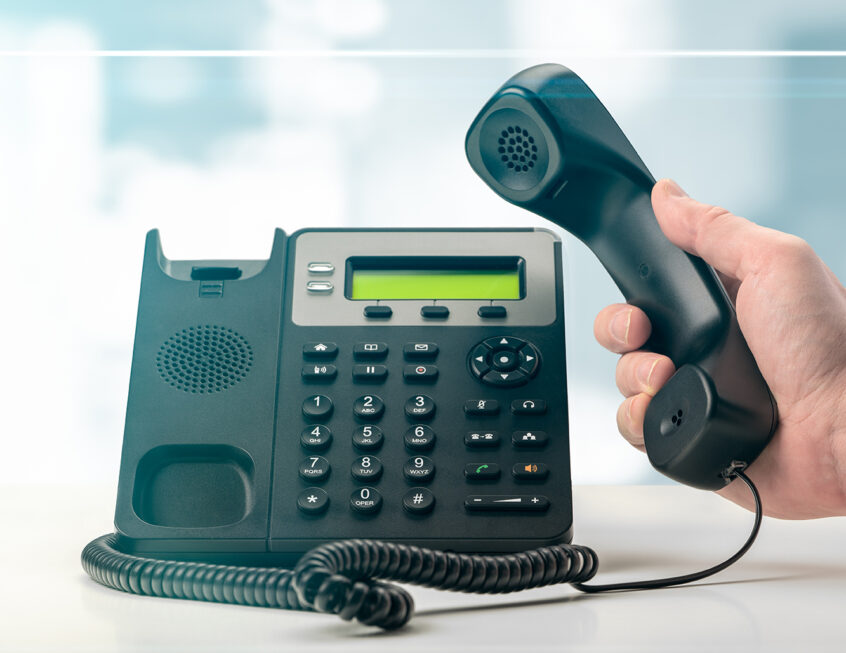
Many businesses outgrow their phone system long before they realize it.
What starts as a simple setup for a small office slowly becomes a patchwork of workarounds. Calls go unanswered. Routing gets confusing. Remote staff rely on personal phones. Costs creep up in ways no one fully understands.
Choosing the right business phone system means selecting one that has all the features you need, yes, but also can grow with your organization without causing downtime, frustration, or unexpected expenses.
Why Read This
If your office is adding employees, locations, or remote staff, your phone system is either helping that growth or quietly working against it. This article helps office managers and business leaders evaluate office phone systems for small businesses based on scalability, reliability, and total cost, not marketing hype or unnecessary features.
The Hidden Cost of Outgrowing Your Phone System
Outdated phone system problems rarely show up all at once. They surface as small operational annoyances that compound over time.
- Dropped or poor-quality calls
- Inconsistent call routing for offices
- Limited visibility into missed or unanswered calls
- Difficulty supporting remote or multi-location teams
- Office phone system downtime during changes or moves
As teams expand, these issues directly affect customer experience, internal coordination, and productivity. At scale, they become business risks.
P.S. This is often when organizations turn to Trust Technology Consultants to evaluate whether their current phone system still fits their operational reality. We offer a free quote to help offices understand their options before problems escalate.
What Actually Matters In a Phone System for a Growing Office
Modern office phone systems should support growth without constant reconfiguration or unexpected costs. When evaluating phone systems for a small office or growing business, three factors matter more than feature lists.
Scalability Without Disruption
A scalable phone system allows you to add users, locations, and devices without replacing infrastructure. Cloud phone systems for small businesses and hosted phone systems are often better suited for this than legacy on-premise setups.
If growth requires downtime, new hardware purchases, or contract renegotiation every time headcount changes, the system will eventually slow the business down.
Reliability and Call Quality
Office call quality issues are more than annoying. They erode trust with customers and partners.
A reliable business phone solution should offer redundancy, clear service-level expectations, and consistent performance across desk phones, softphones, and mobile app business calling.
Predictable Long-Term Costs
Office phone system costs are often underestimated because the pricing looks simple at first. Over time, fees for upgrades, support, licensing, and add-ons can make a “cheap” system expensive.
Evaluating total cost over three to five years is far more useful than comparing monthly rates alone.
Desk Phones, Softphones, and Mobile Apps: Choosing the Right Mix
Growing teams rarely operate from a single location anymore. That’s why modern office phone systems support multiple ways to place and receive calls. The best phone system for a growing office supports all three without sacrificing call quality or control.
- Desk phones still make sense for front desks, shared spaces, and high-call-volume roles.
- Softphones support flexibility for office and remote staff.
- Mobile apps enable remote team phone solutions without personal number exposure.
Phone Features That Support Growth Without Overcomplication
Not all business phone system features deliver equal value. Some features directly improve efficiency as teams scale.
Auto attendant phone systems reduce manual call handling.
Call routing and call forwarding for business ensure calls reach the right person.
Business voicemail features improve response time and accountability.
Multi-location office communication becomes centralized and consistent.
Feature overload, on the other hand, often increases training time and confusion without improving outcomes.
P.S. Trust Technology Consultants helps businesses identify which features actually support growth and which ones inflate cost. Our vendor-agnostic approach starts with a free quote.
Comparing Phone System Options for Small and Growing Offices
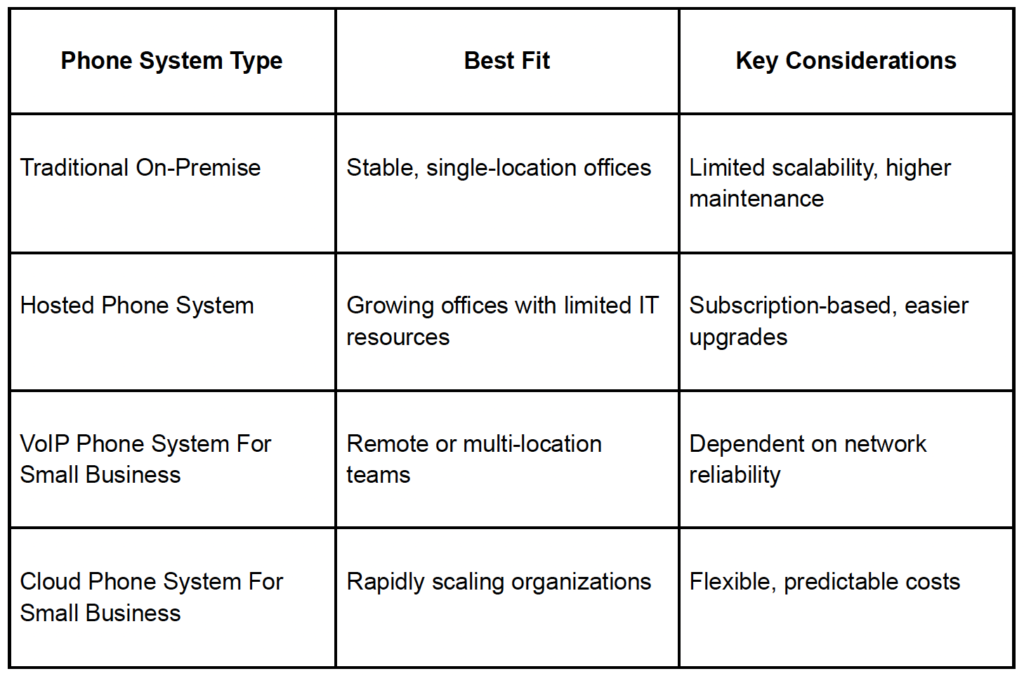
Yes, Phone System Decisions Impact Business Continuity
Phone systems are often overlooked in business continuity planning. When systems go down, customer communication stops immediately.
A reliable phone system for offices should support failover, mobile continuity, and quick recovery during outages or provider issues. These safeguards are especially critical for sales, support, and customer-facing teams.
Scalability, reliability, and long-term cost transparency matter far more than feature checklists.
Trust Technology Consultants helps offices evaluate business phone systems with clarity and confidence.
Our team compares options across providers and delivers a clear recommendation, starting with a free quote to understand your needs and costs upfront.
FAQs
What is the best office phone system for a small business?
The best office phone systems for small businesses are typically cloud-based or VoIP solutions that scale easily, support remote teams, and offer predictable pricing.
How much does an office phone system cost?
Office phone system cost varies based on the number of users, features, and provider. Evaluating total cost over several years is more important than comparing monthly rates.
Should a growing office use desk phones or softphones?
Most growing offices benefit from a mix of desk phones, softphones, and mobile apps to support different roles and work environments.
When should a business upgrade its phone system?
If your current system struggles with growth, remote work, call quality, or reliability, it’s time to evaluate a phone system upgrade for business continuity and scalability.